

How do you hire machine learning engineers when you can’t outbid the AI labs?
You stop shopping in their market.
In the US, a senior ML engineer earns $210,000 to $280,000 a year in base salary alone. In Latin America, the same hire costs $95,000 to $130,000 all in, works your hours, and comes with a 60-day replacement guarantee.
Below is how to hire machine learning engineers step by step: what to decide, what to screen for, and where hires go wrong.
Hiring on your own? Most of it still applies, and we’ll flag where it doesn’t.
The 4-Step Process at a Glance
You make the decisions. We do the legwork.
Kickoff call
YouDefine role, stack, budget
WeSend an interview plan, start the search
Search and vetting
YouAnswer questions
WeSource, interview, test, check references
Finalist interviews
YouInterview finalists, pick one
WeCoordinate the interviews
Offer and start
YouSay yes
WeAgreement in 24 hours, payroll, compliance
How Long It Really Takes
There’s no honest single number. Senior engineering searches take weeks, not days.
One client’s engineering hires, for example, took 31 to 74 days per role, from kickoff to signed offer.
Two things decide where you land: how specific your requirements are, and how fast you move once finalists appear.
Maria Barajas, a senior talent partner, watched one AI startup reach its top finalist after 37 screens.
Then the client paused, and the candidate fielded other offers.
Maria’s rule: “If you can’t move within days of finding your person, you’re not ready to hire.”
What Does a Machine Learning Engineer Actually Do?
A machine learning engineer takes a model and makes it work in production.
Data pipelines, training jobs, serving, monitoring, and the on-call work when accuracy quietly drops.
The job is closer to software engineering than to research, which is why a great data scientist isn’t automatically a great ML engineer.
Three roles get mixed up all the time:
- A data scientist finds the signal in your data and builds the first version of a model.
- A machine learning engineer ships that model and keeps it reliable at scale.
- An MLOps engineer builds the platform other ML engineers deploy on.
Most growing SaaS teams need the second one first.
And the bar moved fast.
Flavio Hernandez, a talent partner at LatamCent, has seen it shift in a year.
In 2025, “experience with LLMs” on a CV was enough to start a conversation.
In 2026 searches, clients ask for engineers who can push AI agents to production from week one and own the architecture.
Skills and Stack to Look For
You don’t need every tool below. Match the stack to the lane you need, and step 1 shows how to pick one.
| Area | What to look for |
|---|---|
| Core | Python, SQL, Git and tested, reviewable code |
| Modeling | scikit-learn, XGBoost, PyTorch or TensorFlow |
| Data | Pipelines in Spark, Airflow or dbt, and a habit of checking data quality |
| Serving and MLOps | Docker, Kubernetes, MLflow, CI/CD and model monitoring |
| Cloud | AWS SageMaker, Google Vertex AI or Azure ML |
| LLM lane | Retrieval (RAG), vector databases, evals, and control of latency and cost |
Tool names won’t get someone past the shortlist.
Flavio sees CVs full of RAG and LangChain from candidates who can’t explain what they built.
Paula Caraballo, a senior talent partner, looks for people who can walk through the evals, instrumentation and feedback loops that make an AI agent improve. Candidates who stop at prompts or a thin API wrapper have no answer on production.
How Much Does It Cost to Hire a Machine Learning Engineer?
Even against US base salary alone, a senior machine learning engineer costs about half as much in Latin America.
Here’s where those numbers come from, per engineer, per year:
| Senior ML engineer | US | Latin America |
|---|---|---|
| Per year | $210,000 to $280,000 base salary | $95,000 to $130,000 total cost |
| What’s in it | Base salary only. Payroll taxes, benefits and equity make the total 1.3 to 1.5 times higher | Salary, payroll and compliance |
| Based on | BLS and published pay data for venture-backed software companies | Accepted offers across 1,200+ LatamCent placements |
Source: LatamCent’s 2026 hiring cost study. Our service fee is quoted per role. Average salaries and sample profiles are on our machine learning engineer hiring page.
And the real gap is wider than the table shows, because the US column leaves out taxes, benefits and equity.
Government salary data puts that US range in context.
The closest category the Bureau of Labor Statistics tracks is computer and information research scientists, which covers machine learning work.
Median pay was $140,300 in May 2025, and the top 10% earned more than $230,630.
Senior ML engineers at venture-backed companies sit at the top of that spread, before any benefits or equity.
Inside any range, proof of work moves the price.
On a recent senior AI search, Victoria Taruselli, a talent partner at LatamCent, saw every finalist ask for pay at or near the top of the band.
Their asks ran about 5 to 15% above what senior engineers had asked for at the same client earlier that year.
Victoria’s read: “The premium follows what someone actually shipped.”
Run your own numbers:
Senior ML engineers, cost per year
You save at least $132,500 a year
Low, mid and high ends of the 2026 ranges above. US figures are base salary only, so your real saving is higher.
Want a number for your exact role?
Send us your ML job description. We’ll reply with a cost range and tell you whether the requirements are realistic.
Where to Find Machine Learning Engineers
Six channels, and what each one is good for:
| Channel | Best for | Watch out for |
|---|---|---|
| Referrals | Candidates someone on your team can vouch for | Slow to surface, and risky if no one vets them |
| GitHub, Hugging Face, Kaggle | Seeing real work before you reach out | Slow: strong profiles take a long time to find, and competition wins don’t prove production skill |
| Job boards | Volume | Resumes written to match your keywords |
| ML communities and meetups | Senior engineers who aren’t job hunting | Slow, relationship-driven |
| Freelance marketplaces | Short projects | Not built for long-term ownership |
| Recruiting partners | Vetted finalists, faster | A fee, so ask how they vet |
Job boards need the most filtering.
On a recent security search, Victoria saw several resumes mirror the job description almost word for word. Identity checks became part of that screen: flagging keyword patterns and confirming each candidate’s location live.
Looking in Latin America yourself? Start with Brazil and Argentina.
Most engineers in the searches Alex Aponte runs come from those two countries, with Mexico City a third hub for full-stack and AI work. Alex leads talent acquisition and recruiting operations at LatamCent.
Is Nearshore Right for Your ML Team?
For most growing SaaS teams, yes. Here’s why, and when it isn’t.
Why It Works
ML work needs live overlap.
Model incidents, drift alerts and code reviews happen during your workday, and you want your engineer online when they do.
Engineers in Colombia, Mexico, Panama and Guatemala work at or near US Eastern and Central time, and Brazil is one to two hours ahead.
On the West Coast? Mexico and Colombia sit one to three hours ahead of Pacific time, depending on the season, so most of your workday still overlaps.
Live overlap is the real difference between nearshore and offshore teams for engineering work.
Every candidate passes an English test before you meet them. Here’s how strong English is across LatAm tech talent.
And they’re full-time, working only for your company. No freelancers juggling other clients.
They also tend to stay: across our placements, tenure runs 1.8 times longer than the US average for the same roles.
When It’s the Wrong Call
Skip nearshore if:
- You need a research scientist to publish papers.
- The role has to sit in a US office.
- The work requires US citizenship or a security clearance.
- You need someone this week.
- The project ends in a few months. A freelancer fits that better.
How to Hire Machine Learning Engineers With LatamCent (Step by Step)
Here’s exactly how we run the search, and what you decide at each step.
Step 1: Scope the Role on the Kickoff Call
Everything starts with a 30-minute kickoff call, where we learn the role, your stack, your team and your budget.
You’ll leave with an interview plan for the role.
Come with answers to five questions:
- What will this person ship in the first 90 days?
- How much data, and how fast does the model need to respond?
- What’s your current stack?
- Who will they report to?
- What’s your budget range?
Then pick the lane, because most ML engineers are strong in one or two of these:
- Classic ML: scoring, forecasting and recommendations.
- MLOps: deployment, monitoring and model pipelines.
- LLM and NLP: retrieval, agents and text features inside your product.
- Computer vision: image and video models.
Adding AI features to a product you already sell? You most likely want the LLM lane, with someone who has shipped retrieval and evaluation, not just prompts.
Get the lane wrong, and every interview after it tests the wrong skills.
Question 1 matters most.
Paula calls the biggest hiring mistake “hiring for keywords instead of ownership.”
The teams Paula sees hire well define success at 90 days before the search starts, like one automation that measurably improves speed, cost or quality. Then they screen every candidate against it.
Nicole Bejarano, a talent partner team lead, names a different one: “The biggest mistake is writing a job description for a unicorn.”
Think AI expert, data engineer and business partner in one hire. In Nicole’s experience, searches like that stall for months.
Flavio hit the same trap outside ML, on a solutions architect search.
The search took 3.5 months and more than 500 contacted candidates.
The job description asked for 12 years in one framework. Halfway through, it turned out the client needed someone to own the whole architecture process.
So keep your job description to the five answers above. One problem, one lane, one outcome.
Step 2: Search and Vet Candidates
Our talent partners source 1,100 to 1,700 machine learning engineers who match your requirements and time zone.
Then we cut that list to a short list of finalists. Every finalist you’ll meet has passed:
- Interviews with role-specific talent partners
- English tests
- Technical exercises
- Reference and background checks
You can preview the kind of pre-vetted ML engineer profiles we present.
When SourceFuse, an AWS Premier Tier Partner, hired its AI/ML leads through us, candidate profiles included video recordings, LinkedIn, resumes, GitHub links and salary expectations.
The profiles also showed their team which areas to focus on in each evaluation.
Wherever your candidates come from, judge them on one thing first.
When we asked our recruiters what gets an AI candidate on the shortlist, most named the same thing: proof of shipped work.
The bar is harder to clear than it sounds. On one AI product search, Daniela García, a talent partner, found that “only a couple of the nine senior engineers I reviewed had an LLM feature in production.”
Who the work shipped to matters too.
In Alex’s experience, “a candidate with solid LLM experience built for internal stakeholders usually loses to one who shipped to customers.”
Credentials don’t make up the difference. “Strong ML credentials alone don’t get past the first screen,” Alex says.
Step 3 has the questions that test for it.
Step 3: Interview Your Finalists
Now it’s your turn.
You’ll interview the finalists with your own standards and make the call.
Monarch (then called TestBox) did exactly that.
We sourced and screened. Their engineers ran the technical panels and cultural interviews, and made the final call.
Here’s how their lead engineer put it:

“We definitely noticed the difference in the level of the candidates.”
Lucas Soranzo Lead Engineer, TestBox
A four-stage loop covers what matters:
- Project deep-dive (45 to 60 min): one model they shipped, end to end. Push on what broke after launch.
- Practical exercise (60 to 90 min): a small, real dataset. Build and defend a baseline.
- ML system design (45 min): serving and monitoring at your real scale.
- Production coding (45 min): pipeline or serving code, not puzzles.
Keep it to four stages. On senior AI searches, Victoria sees competing offers more often, so every extra round is a chance to lose your top pick.
Score every stage the same way:
| Stage | Strong signal | Red flag |
|---|---|---|
| Project deep-dive | Explains what broke after launch and why | Only talks about notebook results |
| Practical exercise | Justifies choices against the data’s limits | Jumps to the most complex model |
| System design | Designs for monitoring and failure | Never mentions monitoring |
| Production coding | Writes testable, service-ready code | Code only runs in a notebook |
Stage 4 doesn’t have to be live coding.
Victoria sees some clients swap it for take-homes and work trials where AI use is expected. One client designed a work trial that would be almost impossible to finish without AI tools.
Then they’ll have candidates walk through how they reviewed and tested the AI output.
Whichever format you pick, test how candidates check AI output. In Flavio’s words, “strong candidates set rules, use AI for code review and still review every line they ship.”
Ten questions to use across the loop. The ones with a name are based on what that recruiter told us.
| Question | A strong answer |
|---|---|
| Walk me through an LLM system you shipped to production. What happened when it got something wrong?Flavio Hernandez | Names the failure, how it was caught and how it was fixed |
| How did you know it was working?Victoria Taruselli | Real measures of quality, cost and latency with real users |
| What broke, how did you measure it, and what would you change?Nicole Bejarano | Specific numbers and an honest change |
| Who used what you built?Alex Aponte | Customers, not only internal teams |
| Did it measurably improve speed, cost or quality?Paula Caraballo | One clear result with a number |
| How do you evaluate an LLM feature before and after launch? | Test sets, evals and a feedback loop from users |
| How would you catch model drift in our product? | Monitoring, alerts and a plan to retrain |
| Our model has to answer in under 200 milliseconds. Where does your design break first? | Clear trade-offs, caching and a fallback |
| How do you use AI coding tools, and how do you check their output?Flavio Hernandez | Set rules, uses AI for review, reads every line |
| Explain this model to one of our customers.Alex Aponte | Plain English, no jargon |
Strong candidates answer with specifics. Weak ones can’t get past the demo.
Step 4: Make the Offer and Start
Say yes, and the agreement goes out within 24 hours.
About 99% of our clients use us as their contractor of record.
We handle the contracts, payroll and compliance, and IP transfers to you under agreements aligned with US standards. You don’t need a legal entity in Latin America.
Prefer to hire the engineer directly into your company? Direct hire is an option too.
Every hire comes with a 60-day replacement guarantee: if the person isn’t the right fit, we’ll find a replacement at no additional cost.
Your part is access, and your security team will care how you set it up.
On security and infrastructure searches, Nicole says the client worry comes down to this: “It’s access, more than time zones.”
Those clients ask about device management, background checks and how access gets revoked.
A setup that keeps most compliance teams calm:
- A company-managed laptop or virtual desktop
- Repo access and a staging or anonymized dataset first
- Production data and on-call once onboarding is done
- A written plan for revoking access
Then hand them a small production task in week one, because shipping one real change teaches more than a month of reading documentation.
Ready to run this process?
Start with a 30-minute kickoff call. You’ll leave with an interview plan for your ML role, with no commitment.
What Our Clients Say

Monarch (formerly TestBox): 8 hires, from software engineers to an engineering manager
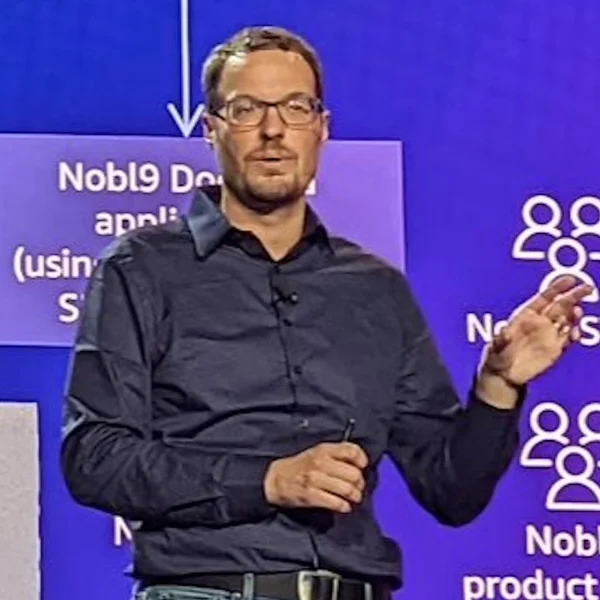
“I was blown away because LatamCent was able to find more than one qualified candidate who met all of it.”
Alex Nauda CTO, Monarch (formerly TestBox)
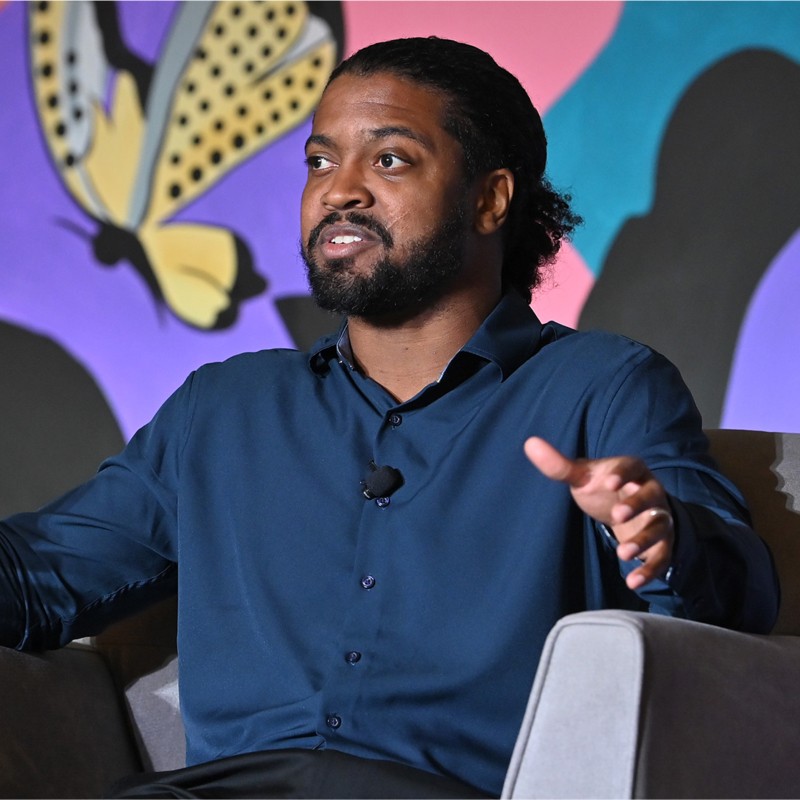
“Without LatamCent, there’s no app.”
Evan Leaphart CEO, Kredit Academy

“We got it right on the first try.”
Joel Olivier Baussaun Co-Founder, CargoFax
Across all roles: 130+ placements for AI and SaaS teams, a 93% first-placement success rate, and a 5.0 rating on G2. Read every client review.
Mistakes That Sink Machine Learning Engineer Hires
A quick recap of where ML hires go wrong. Each one turns into the cost of a bad hire, which runs far past the salary:
| Mistake | What happens | Fix |
|---|---|---|
| Hiring for keywords instead of ownership | You hire a CV, not an owner | Define one 90-day outcome and screen against it |
| Writing a job description for a unicorn | The search stalls for months | Hire for the one problem you need solved first |
| Trusting credentials over shipped work | The hire interviews well but can’t ship | Ask what they shipped to real users |
| Pausing once you find your finalist | Your finalist takes another offer | Lock budget, stakeholders and timeline before the search |
| Hiring a data scientist for a production role | Models never ship | Pick the lane before the search starts |
Frequently Asked Questions
How much does it cost to hire a machine learning engineer?
In the US, a senior machine learning engineer earns $210,000 to $280,000 a year in base salary, and payroll taxes, benefits and equity make the total 1.3 to 1.5 times higher. The same hire in Latin America costs $95,000 to $130,000 all in, about half of the US base salary alone.
How long does it take to hire a machine learning engineer?
It depends on how specific the role is and how fast you move once finalists appear. Senior engineering searches take weeks: one client’s engineering hires took 31 to 74 days per role, from kickoff to signed offer.
What’s the difference between a machine learning engineer and a data scientist?
A data scientist analyzes data and builds the first version of a model. A machine learning engineer puts that model into production and keeps it reliable.
What skills should a machine learning engineer have?
Python and SQL, a modeling framework like scikit-learn or PyTorch, data pipelines, and deployment and monitoring skills such as Docker, MLflow and a cloud ML platform. For LLM work, add retrieval, vector databases and evals.
Are nearshore ML engineers employees or freelancers?
They’re full-time and work only for your company, during US hours. About 99% of LatamCent clients use LatamCent as their contractor of record, which handles contracts, payroll and compliance. Direct hire into your company is also available.
Who owns the IP and handles payroll when I hire in Latin America?
As your contractor of record, LatamCent handles contracts, payroll and compliance, and IP transfers to you under agreements aligned with US standards. You don’t need a legal entity in Latin America.
How do I keep data secure with a remote ML engineer?
Start with a company-managed laptop or virtual desktop, repo access and a staging or anonymized dataset. Open production data and on-call after onboarding, and write down how access gets revoked.
What happens if the hire doesn’t work out?
Every hire comes with a 60-day replacement guarantee. If the person isn’t the right fit in the first 60 days, LatamCent finds a replacement at no additional cost.
Do Latin American ML engineers work US hours?
Yes. Colombia, Mexico, Panama and Guatemala sit at or near US Eastern and Central time, and Brazil is one to two hours ahead. For West Coast teams, Mexico and Colombia are one to three hours ahead of Pacific time.
What should I ask a machine learning engineer in an interview?
Ask about something they shipped to real users: how they knew it was working, what broke, and what they’d change. Strong candidates answer with specific numbers and fixes.
Does a machine learning engineer need a PhD?
No. For production ML roles, shipped models and solid engineering habits matter more than the degree. A PhD matters for research roles.
Hire Your Next Machine Learning Engineer for Half the US Salary
Book a 30-minute kickoff call. You’ll get an interview plan for your role, and you only meet the finalists.
- 60-day replacement guarantee
- Contracts, payroll and IP handled
- Engineers who work your hours