


Quick Facts About Mexico

| Official LanguageSpanish | Time ZoneCentral Standard Time (CST), UTC-6 |
| English SpeakingLow English proficiency | Capital CityMexico City |
| CurrencyMexican Peso (MXN) | Top Talent HubsMexico City, Monterrey, Guadalajara, Querétaro |
| Payroll CycleMonthly | Internet Connectivity83.5% internet penetration |
| Popular IndustriesAutomotive and autoparts, electronics and electrical appliances, aerospace, medical devices, pharma, cloud and AI services, fintech-enabled services | Average Internet Speed90 Mbps fixed broadband (varies by source) |
| Dial code+52 | Taxpayer Identification NumberRFC |
| Top International CompaniesMicrosoft, IBM, Oracle, Salesforce, Google Cloud, SAP, AWS | Tech Startups1,431+ tech startups, including 7 unicorns. Such as: Kavak, Kueski, and Clip. |
Mexico’s Economy

Mexico holds the second-largest GDP in Latin America at roughly USD 1.856 trillion. Export manufacturing runs the economy, and decades of industrial output trained the workforce a U.S. company hires today.
Automotive and autoparts plants trained embedded engineers, QA specialists, and industrial operators inside compliance regimes set by foreign clients. Electronics and appliance manufacturing built firmware and supply-chain capacity on top of that base. Aerospace and medical devices certified professionals under FDA, FAA, and ISO standards.
Inflation holds above the central bank target and the peso trades in a managed but volatile band. Senior candidates price offers against the dollar. Compensation built only in pesos loses senior hires to companies that index pay in USD.
Cloud, AI, and fintech demand absorbs industrial talent into product and data roles. Engineers who shipped embedded systems for Tier 1 automotive suppliers now write backend services for SaaS companies. The 2025 Plan México decree grants federal tax incentives for new investment, dual training, and innovation, accelerating the same crossover that U.S. companies hiring employees in Mexico already access.
A U.S. SaaS company hiring in Mexico staffs engineering, data, and regulated-environment roles from a single country on U.S. business hours.
Why Should US-Based B2B SaaS Companies Hire in Mexico?

Nearshore talent in Mexico combines senior engineering depth with live-hours collaboration and a domestic compliance base built for distributed teams.
A U.S. company hiring engineers does not depend on one feeder school. UNAM and Tecnológico de Monterrey rank inside the QS global top 200, and Universidad Iberoamericana, UAM, and Universidad de Guadalajara fill out the tech talent pipeline. Tec de Monterrey graduates already staff Oracle, IBM, Intel, and the cloud and fintech operations that anchor Guadalajara and Monterrey.
Live collaboration covers the full U.S. workday. The main hiring hubs hold UTC-6 year-round, which keeps 7 to 8 hours of overlap with U.S. Eastern and removes calendar gymnastics from standups, code reviews, and incident response.
English proficiency concentrates by city and by function. Bilingual senior candidates cluster in Monterrey and Guadalajara, and inside technical and R&D roles specifically. Screen by city and function, and the senior bilingual pool surfaces in volume.
Compensation holds the spread at senior level. Senior software engineers run around USD 4,600 per month, roughly a quarter of the U.S. equivalent. Account Executives and Customer Success Managers land near USD 2,700 in total monthly compensation.
Remote operations run on tested compliance. The Telework chapter of the Ley Federal del Trabajo (2021) and NOM-037-STPS-2023 set the obligations, and the 1,431 startups and 7 unicorns headquartered in Mexico already run remote team collaboration under those rules.
For U.S. B2B SaaS companies hiring talent in Mexico, the strongest fits are:
- Backend, full-stack, and mobile engineering
- Data, AI, and ML roles
- DevOps and cloud infrastructure
- Bilingual sales and customer success in Monterrey and Guadalajara
- Finance, RevOps, and product operations
Engineering, data, and bilingual GTM in Monterrey and Guadalajara fit cleanly. English-only customer-facing work outside those hubs requires tighter screening.
Popular Roles to Hire in Mexico
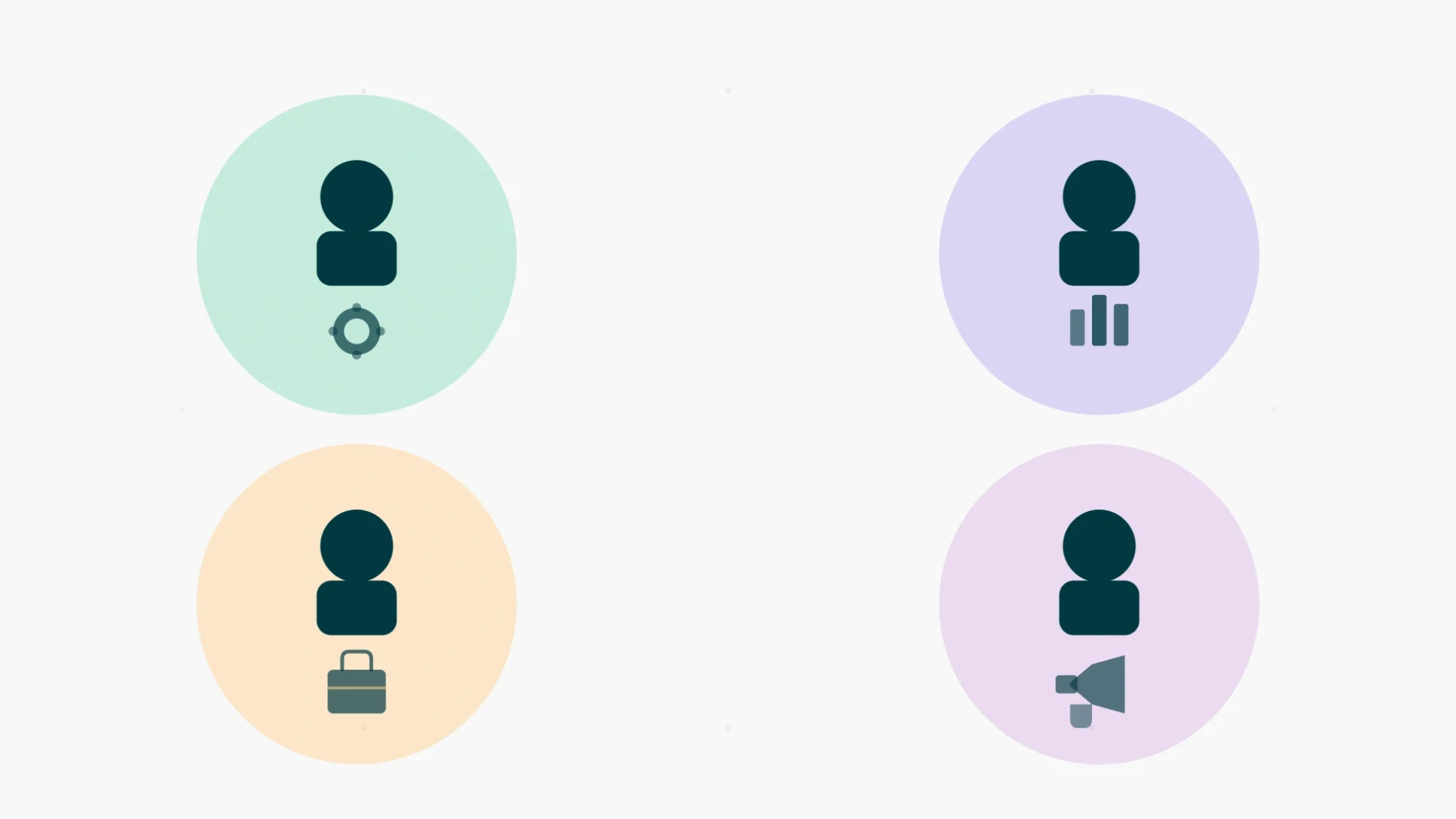
Hiring developers in Mexico draws from the deepest technical bench in Latin America, with senior depth concentrated in Monterrey, Guadalajara, and Mexico City.
Technical & Engineering Teams

Tech talent in Mexico covers the SaaS stack at senior depth, with software developers in Latin America trained inside multinational R&D centers and regional engineering hubs.
- Back-End Developers: Java with Spring Boot, .NET, Node.js, and Python dominate the senior bench. Monterrey and Guadalajara hold the strongest concentration, with steady supply from UNAM and Tec de Monterrey pipelines.
- Full-Stack Software Engineers: React, TypeScript, and Next.js define the current full-stack standard. The pool clears senior at every major hub.
- DevOps Engineers: AWS, Azure, Kubernetes, Terraform, and CI/CD experience runs deep, anchored by the cloud and fintech operations that built regional engineering centers in Guadalajara.
- Full-Stack QA Engineers: Selenium, Cypress, and Playwright proficiency holds at senior levels. QA ranks among Mexico’s most mature technical disciplines.
- Data Engineers (Back-End Focus): Python, SQL, and BI tooling cover the standard SaaS data stack. AI and ML specialization scales fast, with Tec de Monterrey graduates anchoring the pipeline.
- Cybersecurity Engineers: SOC analysts, IAM specialists, and cloud security engineers fit U.S. SaaS hiring profiles, though senior candidates compete with domestic banking and fintech demand.
Go-To-Market (GTM), Finance & Marketing

Bilingual GTM concentrates in Monterrey, Guadalajara, and Mexico City. Outside those hubs, English-only outbound demands tighter screening of the English-speaking workforce.
- Sales Development Representatives (SDR): Monterrey and Guadalajara hold the largest pool of U.S.-facing outbound talent, with live time zone overlap with the U.S. that supports same-day prospecting.
- Account Executives (AE): Senior AEs with U.S. SaaS sales experience source from Monterrey, Mexico City, and the multinational tech operations in Guadalajara.
- Customer Success Managers (CSM): Bilingual CSMs covering U.S. accounts source from the cloud and fintech operators that built CSM teams in Mexico over the last decade.
- Revenue Operations Managers: Familiarity with HubSpot, Salesforce, and the standard SaaS revenue stack runs deep among professionals trained at multinationals.
- FP&A Analysts (Financial Planning & Analysis): A deep pool trained in U.S. GAAP and IFRS, with SaaS subscription and recurring revenue exposure scaling fast.
- Growth Strategists: U.S. market experience concentrates in Mexico City and Guadalajara, built by domestic and international agency work.
Security, Support & HR
Support, operations, and people functions transfer cleanly into distributed teams embedded with U.S. SaaS organizations.
- Customer Support Representatives: Mexico’s contact center sector produces senior bilingual support talent at scale, with strong concentration in Monterrey and Tijuana.
- Technical Support and Implementation Specialists: SaaS onboarding and implementation experience sources from Monterrey, Guadalajara, and Mexico City, particularly from professionals trained at U.S. tech operators.
- IT Support and Systems Administrators: Available at every major hub, cost-competitive for U.S. companies building internal IT coverage.
- Cybersecurity Analysts: SOC analyst profiles source readily, though senior compete with banking and fintech salaries.
- Recruiters: Familiarity with U.S. hiring practices holds as the baseline among recruiters trained at multinational firms.
- HR Business Partners, People Ops, and Payroll Specialists: Fluency in the Ley Federal del Trabajo is the baseline, and senior HRBPs already manage distributed U.S.-Mexico team structures.
Mexico · MXN to USD
The peso your budget pays, in real dollars
Convert Mexican pesos to US dollars at today’s rate, then see what a decade of peso movement means for what your Mexican hire actually costs you.
Reference rates, not a live daily feed. Live FX moves daily. Figures use annual average mid-market rates for historical years and a July 2026 reference rate for “Today.” Use this to plan, not to lock a contract.
USD to MXN, 10-year trend
Lower line = stronger peso. After a volatile decade the peso is slightly stronger than in 2016, so budget on today’s rate rather than counting on FX tailwinds.
Sources: OECD / U.S. Federal Reserve (FRED) annual average USD/MXN; latest spot rate, July 2026. Rates are period averages and will differ from any single day’s quote.
Ways U.S. Companies Can Hire Talent in Mexico

Three legal routes cover hiring talent in Mexico, with trade-offs in speed, cost, and compliance burden.
U.S. companies hire talent in Mexico through three legal routes: setting up a local entity, using an Employer of Record, or engaging independent contractors. The decision turns on headcount, timeline, and risk tolerance. Most SaaS companies start with an EOR and revisit entity setup once tenure and team size justify the overhead.
Setting Up a Local Entity in Mexico

Mexican law offers three common entity forms for foreign hiring: the S.A. de C.V. (corporation), the S. de R.L. de C.V. (LLC-style), and the S.A.S. (simplified, for natural persons). Branch establishments cover companies that prefer to operate as an extension of the parent rather than a separate legal entity.
Standard incorporation runs through these stages:
- Reserve the company name with the Ministry of Economy
- Sign the incorporation deed before a fedatario or notary
- Register with the Public Registry of Commerce (RPC)
- Obtain the RFC tax ID from the SAT
- Enroll in the Mexican Business Information System (SIEM)
Official timelines run 10 to 33 days for a standard S.A. de C.V. or S. de R.L. de C.V., 0 to 12 days for an S.A.S., and 0 to 40 days for a branch establishment.
Labor obligations attach from day one under the Ley Federal del Trabajo. Mandatory contract elements include:
- Written employment contract drafted in Spanish
- IMSS social security registration before the first payday
- Aguinaldo (13th-month bonus) accruing from the start date
- Severance liability accruing from the first day of employment
Entity setup fits companies hiring 10 or more employees, planning multi-year local presence, or needing local invoicing capacity. Below that threshold, the overhead outweighs the control.
Use Employer of Record (EOR) in Mexico

An Employer of Record in Mexico legally employs workers on the client’s behalf, handling payroll, taxes, mandatory benefits, and labor law compliance under the Ley Federal del Trabajo. The client directs day-to-day work; the EOR carries the legal employer relationship.
The EOR handles:
- Drafts employment contracts compliant with the Ley Federal del Trabajo
- Processes monthly payroll in MXN
- Remits IMSS, INFONAVIT, and SAR contributions
- Withholds and remits income tax
- Administers termination and severance payouts
Employer cost uplift through an EOR in Mexico runs 30 to 40 percent above gross salary, covering IMSS, INFONAVIT, retirement contributions, and the variable labor-risk premium tied to industry. PTU profit-sharing at 10 percent of taxable profit sits as a separate obligation that the EOR administers but the client funds.
EOR fits these scenarios:
- Companies hiring 1 to 10 employees in Mexico
- Pilot hires before committing to entity setup
- Remote-first SaaS teams that need compliant contracts without local infrastructure
Providers operating in Mexico include Deel, Remote, Oyster, and Papaya Global.
Hire Independent Contractors in Mexico

Hiring contractors in Mexico offers flexibility and lower administrative burden, with significant reclassification risk attached.
Article 20 of the Ley Federal del Trabajo defines an employment relationship as work that is personal, paid, and subordinate. Contractor engagements that meet all three triggers reclassification, and the employer owes severance and benefits retroactively. The 2021 labor reform prohibited general personnel outsourcing; only specialized services and works qualify, and only when the provider holds active REPSE registration with the Ministry of Labor.
Contractor arrangements suit:
- Short-term project work with bounded deliverables
- Specialized consulting engagements
- Pre-hire pilots that convert to full employment after validation
Companies engaging contractors limit exposure through:
- Service agreements scoped to specific deliverables, not ongoing labor
- Contracts that exclude exclusivity clauses and fixed schedules
- Payment structures tied to milestones rather than time
- REPSE verification for any outsourcing provider before engagement
Entity setup delivers full control with administrative overhead and a multi-week setup window. EOR removes compliance burden, and lands hires within days, at a 30-to-40 percent cost uplift. Contractor engagement runs fastest, with reclassification risk that scales with engagement duration and structure.
Employment Laws in Mexico

Employment laws in Mexico run through the Ley Federal del Trabajo (LFT), enforced by the Secretaría del Trabajo y Previsión Social and the federal labor courts. The LFT protects employees by default and treats every ambiguity in favor of the worker.
For U.S. employers, three features carry the most weight: severance accrues from the first day of employment, indefinite contracts apply unless a different form is documented, and the statutory workweek drops from 48 to 40 hours between 2026 and 2030.
Employment Laws in Mexico
Severance under labor laws in Mexico carries the heaviest exposure on termination. The LFT entitles a worker dismissed without cause to either reinstatement or three months’ salary plus accrued benefits (Art. 48). Indefinite contracts trigger an additional 20 days’ salary per year of service (Art. 50), and prima de antigüedad adds 12 days’ salary per year served (Art. 162).
Payroll in Mexico runs on monthly cycles, with employer obligations covering:
- IMSS social security contributions
- INFONAVIT housing fund contributions
- SAR retirement contributions
- Monthly ISR income tax withholding and remittance
- Aguinaldo accrual recorded each month toward annual payout
- PTU profit-sharing distributed annually
Companies hiring through an EOR transfer payroll execution and statutory compliance to the provider. Companies running a local entity own IMSS reporting, severance management, and the phased workweek reduction directly.
Workforce planning under employment compliance in Mexico starts from the first day of employment, with severance accruing immediately and the statutory workweek dropping two hours every year through 2030.
Leave Policy in Mexico

Mexican labor law sets minimum statutory leave entitlements and paid leave policies through the Ley Federal del Trabajo, with most maternity and sick leave costs absorbed by the Instituto Mexicano del Seguro Social (IMSS). Employers can offer more generous policies but cannot drop employee benefits in Mexico below the legal baseline.
Here’s a clear breakdown of what applies:
Leave Policy in Mexico
| Maternity Leave12 weeks total: 6 weeks before birth and 6 weeks after. Up to 4 of the pre-birth weeks may transfer to the post-birth period. Up to 8 additional weeks apply in disability or hospitalization cases. IMSS pays the subsidy at 100% of registered salary for up to 84 days when eligibility rules are met. Job protection applies throughout. | Parental LeaveNo statutory entitlement beyond maternity and paternity. |
| Paternity Leave5 business days, paid by the employer, for birth or adoption. | Sick LeaveIMSS pays 60% of registered salary from day 4 of illness for up to 52 weeks, extendable by 26 additional weeks. IMSS medical certificate required for subsidy access. |
Maternity leave compensation is funded through IMSS, while contribution continuity and administrative registration sit with the company. Job protection applies during pregnancy and throughout the entire leave period.
Maternity coverage varies by case:
- Standard birth: 6 weeks before, 6 weeks after (12 weeks total)
- Transferred allocation: up to 4 pre-birth weeks moved to post-birth recovery (4+8 split)
- Disability or hospitalization: up to 8 additional weeks beyond the base 12
Paternity leave remains limited to five business days, paid directly by the employer. International employers hiring senior technical and product talent often extend this to 10 or 15 business days.
Sick leave funding splits between employer and IMSS. From day 4 onward, IMSS pays 60% of registered salary against a valid medical certificate, with coverage running up to 52 weeks and extensions reaching 78 weeks for documented cases. Days 1 to 3 sit with the employer under typical practice, with no fixed statutory rate.
When budgeting for Mexican hires, leave costs and temporary coverage planning should be factored in early, with particular attention to the unfunded days 1 to 3 of sick leave and the variable maternity coverage window.
Remote Work Regulations in Mexico

Mexico regulates remote work through a 2021 telework reform to the Ley Federal del Trabajo and a 2023 health and safety standard for distributed teams. Workers who spend most of their time outside company premises qualify as teleworkers, which triggers a separate set of legal obligations.
Teleworkers hold an explicit right to disconnect. Employers cannot demand availability outside agreed hours, and messages sent beyond those hours carry no enforceable expectation of response.
Employers provide, install, and maintain telework equipment, cover telecom expenses tied to the role, and pay a proportional share of each teleworker’s electricity costs. Companies also track inventory of supplies delivered to each remote employee, which labor authorities may request during inspection.
A broader right-to-disconnect reform passed the Chamber of Deputies and remains pending enactment. Once it takes effect, the same obligations reach every employee working remotely, not only those formally classified under the telework regime.
Companies hiring remote employees in Mexico carry equipment, reimbursement, and disconnection compliance directly, whether through an EOR or a local entity. Written telework agreements should match or exceed the statutory floor set by the 2021 reform.
Common Benefits & Perks Expectations in Mexico

Base salary alone does not close senior bilingual offers in Mexico. The statutory floor sets the minimum, and the supplemental package determines whether top technical and product candidates engage. Four benefits function as the de facto market baseline: private medical coverage, meal vouchers, the savings fund, and a real development budget.
- Private Medical Insurance (SGMM): Seguro de Gastos Médicos Mayores covers private hospital and specialist care that IMSS does not reach. Senior candidates expect SGMM extended to spouse and dependents, and multinationals include it by default.
- Vales de Despensa (Meal/Grocery Vouchers): A staple of competitive packages, delivered through a regulated benefits card and tax-advantaged up to statutory limits. Tech professionals factor this benefit directly into total compensation calculations.
- Fondo de Ahorro (Savings Fund): A jointly funded savings vehicle, with employer matching capped under tax rules. The fund operates as a long-tenure retention mechanism alongside other statutory employee benefits.
- Aguinaldo Above Statutory Minimum: The 15-day legal floor extends to 20 or 30 days at competitive employers. Engineering and product hires read the bump as a marker of employer maturity.
- Extra Paid Time Off: Statutory vacation starts at 12 business days after year one. Companies hiring senior engineering and GTM talent raise the floor to 15 or 20 days from start, with separate sick and personal days carved out.
- Life Insurance: Group life coverage at one or two times annual salary supplements IMSS death benefits. Common at multinationals and standard at companies recruiting senior leadership from the same pool.
- Development Budget: Reimbursement for English training, cloud certifications, conferences, and technical courses. The benefit anchors the English-speaking workforce pipeline that U.S. SaaS companies recruit from directly.
- Stock Options or Equity: Standard at startups and growth-stage SaaS companies. Mexican senior talent at international tech operations holds equity expectations comparable to peers at U.S. headquarters.
Mexican senior professionals working in international workforce management environments bring direct exposure to U.S. and European compensation structures. Standard global package elements set baseline expectations within the senior tech labor market.
Layering supplemental benefits anchors the work culture in Mexico that senior candidates already operate inside. Aguinaldo bumps, fondo de ahorro contributions, and SGMM coverage convert into tenure, which makes cost-effective global hiring a function of how the package is built, with base salary as one component among several.
Statutory Time Off in Mexico

Statutory time off in Mexico comes through two channels: paid vacation that scales with tenure and seven mandatory public holidays per year. Both shape capacity planning for U.S. SaaS companies running sprints, support coverage, or quarter-end work through Mexican teams.
Paid Time Off (Vacation) in Mexico
Vacation accrual under the Ley Federal del Trabajo runs in business days and scales with years of service. Employees hit the floor at 12 days after year one and reach 20 days by year five, then add two days every five years thereafter.
- Year 1: 12 business days
- Year 2: 14 business days
- Year 3: 16 business days
- Year 4: 18 business days
- Year 5: 20 business days
- Years 6-10: 22 business days
- Years 11-15: 24 business days
- Years 16-20: 26 business days
- Years 21-25: 28 business days
At least 12 consecutive days must be taken in one block, which removes the option of breaking the full entitlement into one-day increments. Unused vacation pays out on termination at the employee’s daily rate. Vacation premium of 25 percent on the salary covering vacation days applies separately and accrues regardless of whether the employee takes the leave.
Mexico’s Public Holidays
Seven mandatory labor holidays apply nationwide, with an additional federal or local election day added in qualifying years. Working on a mandatory holiday triggers triple pay for that day, which combines regular holiday pay with double pay for the service rendered.
- January 1: Año Nuevo (New Year’s Day)
- February 2: Día de la Constitución (Constitution Day, observed on the first Monday of February)
- March 16: Natalicio de Benito Juárez (observed on the third Monday of March)
- May 1: Día del Trabajo (Labor Day)
- September 16: Aniversario del inicio de la Independencia (Independence Day)
- November 16: Día de la Revolución Mexicana (observed on the third Monday of November)
- December 25: Navidad (Christmas Day)
Holiday clustering matters for capacity planning. Independence Day and Día de la Revolución sit close to U.S. quarter-end cycles, and December’s Navidad falls inside the same window most U.S. SaaS teams already plan around. Build coverage rotations around the seven fixed dates and confirm any election-year additions before locking the calendar.
How LatamCent Can Help You Hire in Mexico

Most US founders finish a country-by-country labor breakdown like the one above and reach the same conclusion: they want a partner who already does this for a living. That is the job, in Mexico specifically.
LatamCent runs sourcing and compliance as a single workflow. We recruit inside the networks where senior Mexican engineers, product leads, and operations talent move, then carry the contract, payroll, IMSS, INFONAVIT, and SAT filings, and all legal aspects under a contractor-on-record model. One USD invoice goes to you each month. The Mexican compliance footprint stays with us.
For US B2B SaaS teams, a Mexico engagement looks like this in practice:
- 21-day average from kickoff to signed offer
- 93% first-placement success rate
- 60-day replacement coverage on every hire
- Pre-vetted shortlists with technical and English screening built in
- Engineering, AI, data, GTM, finance, and people roles under one partner
If Mexico is already on your shortlist for an engineering, data, or GTM hire, the next step is a 30-minute scoping call. We will tell you whether the role is sourceable in your timeline before you spend cycles on it.
Frequently Asked Questions About Hiring in Mexico
Yes. US companies hire talent in Mexico through three legal routes: setting up a local entity, using an Employer of Record, or engaging independent contractors. Most SaaS companies start with an EOR and revisit entity setup once tenure and team size justify the overhead.
Employer cost uplift through an EOR in Mexico runs 30 to 40 percent above gross salary, covering IMSS, INFONAVIT, retirement contributions, and the variable labor-risk premium tied to industry. PTU profit-sharing at 10 percent of taxable profit sits as a separate obligation that the EOR administers but the client funds.
Senior software engineers run around USD 4,600 per month, roughly a quarter of the US equivalent. Account Executives and Customer Success Managers land near USD 2,700 in total monthly compensation.
No. An Employer of Record legally employs workers on the client’s behalf, handling payroll, taxes, mandatory benefits, and labor law compliance, so remote-first SaaS teams get compliant contracts without local infrastructure. Entity setup fits companies hiring 10 or more employees, planning multi-year local presence, or needing local invoicing capacity.
The main hiring hubs hold UTC-6 year-round, which keeps 7 to 8 hours of overlap with US Eastern. This live collaboration covers the full US workday and removes calendar gymnastics from standups, code reviews, and incident response.
The statutory workweek is 48 hours per week in 2026, reducing in phases to 40 hours per week by 2030, with overtime paying a 100 percent premium up to 12 hours per week and 200 percent beyond that cap. Employment runs under the Ley Federal del Trabajo, where indefinite contracts apply by default and severance accrues from the first day of employment.