
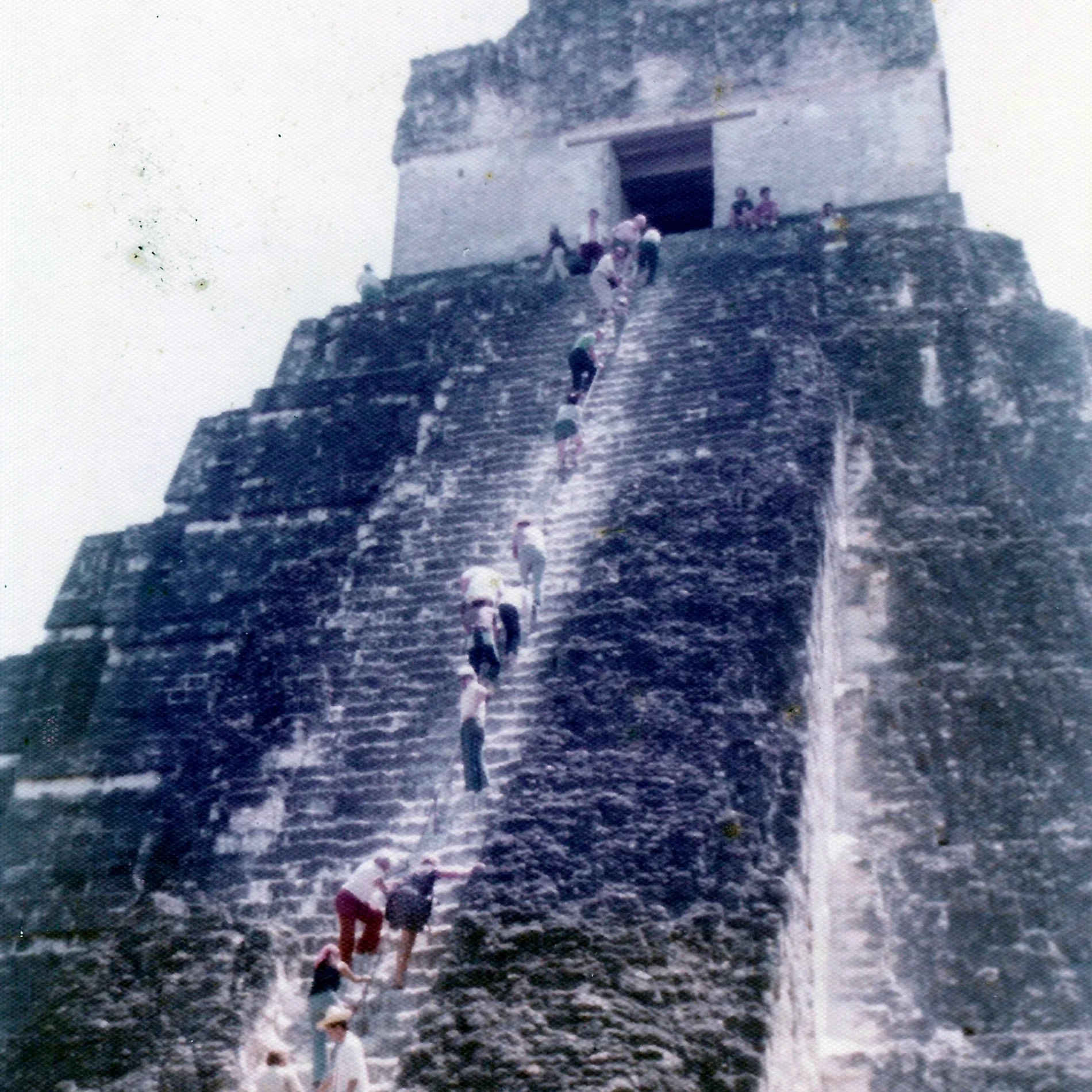

Quick Facts About Guatemala

| Official LanguageSpanish | Time ZoneCentral Standard Time (CST), UTC-6 |
| English SpeakingModerate English proficiency | Capital CityGuatemala City |
| CurrencyGuatemalan Quetzal (GTQ) | Top Talent HubsGuatemala City, Quetzaltenango, Antigua Guatemala, Chimaltenango |
| Payroll CycleMonthly | Internet Connectivity62.0% internet penetration |
| Popular IndustriesAgriculture and agro-exports, manufacturing and apparel, wholesale and retail trade, transport and logistics, BPO and shared services, telecom and digital services | Average Internet Speed80 Mbps fixed broadband (varies by source) |
| Dial code+502 | Taxpayer Identification NumberNIT / CUI |
| Top International CompaniesTELUS Digital, Concentrix, Capgemini, Cognizant, Tigo, Everise | Tech Startups37+ tech startups, no unicorns reported. Such as: Pacifiko, Paggo, and HYBRICO Energy Technologies. |
Guatemala’s Economy
Guatemala is Central America’s largest economy and ranks tenth in Latin America by nominal GDP, at roughly USD 113 billion. Agro-exports, CAFTA-DR manufacturing, and a services layer concentrated around Guatemala City and Escuintla account for most output.
Each sector trained a different professional layer. Coffee, sugar, and apparel manufacturing built a workforce fluent in U.S. trade compliance and supply-chain operations. Telecom and BPO companies operating around the capital spent two decades absorbing U.S. account work, producing an English-speaking workforce in customer support, inside sales, finance operations, and back-office functions, along with the local managers who learned to run distributed teams during that period.
Macro conditions hold steady. The quetzal trades against the dollar with low volatility, and inflation has stayed in low single digits for years. INE recorded labor informality at 66.2% in 2025, and the formal segment of the workforce carries statutory employee benefits and structured payroll. Hiring employees in Guatemala runs through that formal segment.
Decree 29-89, the export and maquila services law, extended export incentives to ICT, software development, and call-center work delivered to non-resident clients, with a parallel free-zone regime covering digital services. Local operators have been employed under those regimes for two decades, building a tech talent pipeline with direct billing and delivery experience for U.S. buyers.
Guatemala’s services sector concentrates in Guatemala City, with software, BPO, and shared-services operations running throughout the metropolitan area and extending into Antigua and Quetzaltenango.
Why Should US-Based B2B SaaS Companies Hire in Guatemala?

U.S. B2B SaaS companies hire in Guatemala for a specific combination: strong U.S. time zone overlap, a salary floor below larger LATAM hubs, and a bilingual concentration that holds in two cities where most foreign employers recruit.
The talent pipeline is concentrated and traceable. Five universities anchor it: Universidad del Valle de Guatemala (UVG), Universidad de San Carlos de Guatemala (USAC), Universidad Francisco Marroquín (UFM), Universidad Rafael Landívar, and Universidad Galileo. Higher education produced 41,529 graduates in 2023, with ten universities operating inside Guatemala City alone. UVG and UFM produce most of the engineering and CS profiles that nearshore talent in Guatemala recruiters source from.
English proficiency tells two different stories. At the national level, the pool is limited. Inside the tech sector, EF EPI 2025 places the IT industry score at 531, with Guatemala City at 519 and Quetzaltenango at 513. Outside those two cities, the score drops sharply. Screen for communication during the first interview, and source from Guatemala City and Quetzaltenango for English-speaking roles.
Time zone overlap with the U.S. is one of the strongest in LATAM. Guatemala runs on UTC-6 year-round with no daylight saving time, giving U.S. Eastern teams 8 hours of daily overlap during EST and 7 hours during EDT. Standups, code reviews, and live sprint work happen inside business hours on both sides.
The cost structure extends the runway. Junior software engineers earn around USD 751 per month, and senior engineers around USD 1,682 per month, with sales roles like Account Executive landing at approximately USD 1,493 per month. The gap against U.S. benchmarks runs roughly 6x on common senior software and B2B sales roles, with junior engineering exceeding that multiple.
Remote work maturity is established in practice. Guatemala’s BPO sector has run distributed teams for two decades, and tech talent in Guatemala carries practical experience with U.S.-style remote operations.
For U.S. B2B SaaS companies building:
- Backend and full-stack engineering teams
- Customer support and customer success operations
- Inside sales and SDR functions
- Finance operations and back-office
- QA and software testing
Roles requiring senior English-facing GTM leadership outside Guatemala City and Quetzaltenango will face sourcing constraints. Inside those two cities, hiring talent in Guatemala for bilingual operations, engineering, and customer-facing work is well supported.
Popular Roles to Hire in Guatemala
Hiring developers in Guatemala works best for back-end, full-stack, and quality engineering roles, with strong availability in bilingual customer operations and finance support out of Guatemala City and Quetzaltenango. Senior GTM roles facing U.S. markets carry sourcing constraints outside those two cities.
Technical & Engineering Teams

Tech talent in Guatemala concentrates in application development, quality engineering, and cloud operations, trained by software export companies, banking modernization programs, and the BPO sector.
- Back-End Developers: Java, .NET, Node.js, and Python are the dominant stacks. UVG and USAC graduates fill most of the pipeline, with senior profiles often coming from software export companies that have served U.S. and regional clients.
- Front-End Developers: React and Angular are standard. Mid-level availability is strong; senior profiles with U.S. product team experience are smaller in volume and competitive to source.
- Full-Stack Engineers (Web and Mobile): Available in both web and mobile, with mobile development driven by regional fintech and e-commerce demand. Cross-platform familiarity is common.
- Full-Stack QA Engineers: QA is one of Guatemala’s most mature technical disciplines. The BPO sector built a quality and testing culture that translates well into automated testing for SaaS product teams.
- Data Scientists: Available for analytics, reporting, and dashboarding roles. Profiles with modern data stack experience (dbt, Snowflake, Looker) exist but are smaller in volume than traditional BI.
- IT Support and Cloud Operations Engineers: AWS and Azure operations talent is available, primarily from BPO and banking modernization backgrounds. Service desk and infrastructure support roles are well covered.
Go-To-Market (GTM), Finance & Marketing

GTM roles in Guatemala work for U.S.-facing operations when sourced from Guatemala City and Quetzaltenango, where bilingual proficiency holds. Outside those cities, English-facing roles are constrained.
- Sales Development Representatives (SDR): Viable for U.S. outbound when sourced from the two bilingual centers. The BPO sector trained a large pool in U.S. account workflows, scripts, and CRM tools.
- Account Executives (AE): Available for U.S. mid-market and SMB segments, with stronger pipelines for AEs with prior BPO or inside sales backgrounds. Enterprise-segment AEs are a smaller pool.
- Customer Success Managers (CSM): Bilingual CSMs exist, sourced primarily from BPO customer-facing tiers and software companies with U.S. client bases.
- Customer Support Representatives (Bilingual): One of Guatemala’s strongest categories. Decades of BPO contracts with U.S. enterprises produced a deep pool at agent, team lead, and quality assurance levels.
- Accounts Payable Specialists: Available for AP, AR, reconciliations, and month-end close. Profiles with U.S. GAAP exposure exist at companies that serve U.S. clients directly.
- Collections Specialists: Strong availability, driven by banking sector demand and BPO finance operations contracts.
- Growth and Content Specialists for U.S.-Facing Teams: Available, but a smaller pool. Bilingual content marketers and growth analysts cluster around startups and software exporters in Guatemala City.
Security, Support & HR
The BPO sector built workforce management, service desk, and HR operations at scale, which is what makes these categories well-staffed in Guatemala.
- Workforce Management and Real-Time Analysts: WFM is one of Guatemala’s deepest operational disciplines, with analysts trained in forecasting, scheduling, and intraday management for U.S. contact center operations.
- Implementation and Onboarding Support Specialists: Available for SaaS customer onboarding, technical implementation, and configuration roles, sourced from BPO and software services backgrounds.
- IT Support and Service Desk: Tier 1 and Tier 2 support is widely available, with strong bilingual coverage for U.S. business hours.
- Talent Acquisition and HR Process Design: Senior HR professionals with experience designing recruiting and onboarding processes for distributed teams are available, primarily from BPO and software export companies.
- QA and Training Roles: Quality assurance for customer operations and training program managers are well represented, given the BPO sector’s investment in agent development.
Every role above runs through a formal employment structure under Guatemalan labor law. U.S. companies hiring in Guatemala have three legal routes to choose from.
Guatemala · GTQ to USD
The quetzal your budget pays, in real dollars
Convert Guatemalan quetzales to US dollars at today’s rate, then see what a decade of quetzal movement means for what your Guatemalan hire actually costs you.
Reference rates, not a live daily feed. Live FX moves daily. Figures use annual average mid-market rates for historical years and a July 2026 reference rate for “Today.” Use this to plan, not to lock a contract.
USD to GTQ, 10-year trend
The quetzal is one of the most stable currencies in the region, moving only a few percent in a decade. Your dollar budget holds its value.
Sources: OECD / U.S. Federal Reserve (FRED) annual average USD/GTQ; latest spot rate, July 2026. Rates are period averages and will differ from any single day’s quote.
Ways U.S. Companies Can Hire Talent in Guatemala

U.S. companies have three legal routes to hire in Guatemala: setting up a local entity, partnering with an Employer of Record, or contracting independent professionals. Each route carries different costs, compliance obligations, and timelines.
For most SaaS companies starting in Guatemala, an EOR is the recommended starting point. Entity setup makes sense at scale. Contractor arrangements offer speed but carry the highest reclassification risk under Guatemalan labor law.
Setting Up a Local Entity in Guatemala

The most common entity types for foreign companies entering Guatemala are the Sociedad Anónima (S.A.) and the Sociedad de Responsabilidad Limitada (S.R.L.). A Sucursal de Sociedad Extranjera (foreign branch) is also available for companies that want a Guatemalan presence without forming a separate local company; the branch can be registered as temporary (2 years) or indefinite.
Registration runs through five main steps:
- Notarial public deed of incorporation
- Filing with the Registro Mercantil using form SATRM-02 (with fees, deed, director appointments, IDs, and proof of address)
- Obtaining the SAT NIT/RTU tax registration
- Registering the employer with IGSS (social security)
- Registering individual employment contracts in RECIT-V2
End-to-end timing typically runs 2 to 6 weeks under normal conditions.
Once registered, employer obligations begin immediately. Indefinite-term employment is the legal default, social security contributions and statutory bonuses start with the first payroll, and contracts have to be filed individually through RECIT-V2.
Entity setup makes sense for companies planning a sizeable team, needing local invoicing, or building a permanent operational presence. For companies hiring one to ten people, the administrative load rarely justifies the setup cost before the first hire is onboarded.
Use Employer of Record (EOR) in Guatemala

An Employer of Record in Guatemala is a third-party company that legally employs workers on your behalf, handling payroll, taxes, benefits, and labor law compliance. Your company directs the day-to-day work; the EOR in Guatemala handles everything else.
The EOR handles:
- Employment contracts and RECIT-V2 registration
- Monthly payroll in quetzales
- IGSS, IRTRA, and INTECAP employer contributions
- Income tax withholding and SAT filings
- Statutory bonuses (Aguinaldo, Bono 14, bonificación incentivo)
The employer cost uplift in Guatemala runs roughly 12.67% above gross salary, covering IGSS (10.67%), IRTRA (1.00%), and INTECAP (up to 1.00%). Employee withholding of 4.83% is separate. Statutory cash bonuses (Aguinaldo, Bono 14, and bonificación incentivo) add to total annual cost beyond the percentage uplift.
The EOR model fits:
- Teams of 1 to 10 employees
- Companies running a pilot hire before committing to a local entity
- Remote-first SaaS teams that need compliant contracts without local infrastructure
- Companies that want predictable monthly cost without managing IGSS, SAT, and RECIT-V2 directly
Providers operating as an employer of record in Guatemala include Deel, Remote, and Papaya Global.
Hire Independent Contractors in Guatemala

Hiring contractors in Guatemala works for short-term, project-based engagements with clear deliverables. The trade-off is reclassification risk under Guatemalan labor law.
Contractors fit:
- Defined-scope projects with a clear end date
- Specialist work billed by deliverable
- Engagements where the contractor serves multiple clients
- Short-term coverage during entity or EOR setup
Article 18 of the Labor Code treats employment relationships by substance, not by contract label. A relationship that shows personal service, continued dependence or subordination, employer direction and control, and fixed remuneration is treated as employment, regardless of how the contract is written. Reclassification triggers retroactive severance, social security back-payments, and statutory bonus obligations from day one of the engagement.
Mitigation practices include:
- Scoping work to specific deliverables, not ongoing functions
- Avoiding fixed schedules and exclusivity
- Ensuring the contractor serves other clients and uses their own tools
- Reviewing long-term engagements with local labor counsel before renewal
For companies exploring cross-border employment in Guatemala for the first time, an EOR removes the heaviest compliance load without requiring local infrastructure. Entity setup delivers full control at the cost of administrative weight. Contractor arrangements offer the fastest start, with the highest reclassification exposure of the three routes.
Guatemala’s labor laws, known as employment regulations in Guatemala, are employee-protective by design. They are codified in the Código de Trabajo (Guatemalan Labor Code) and enforced by the Ministry of Labour (MINTRAB), with payroll and social security obligations administered by SAT and IGSS.
Three features carry the most financial weight for U.S. employers: severance accrues from year one under Article 82, employer social security contributions plus statutory bonuses (Aguinaldo, Bono 14, bonificación incentivo) add roughly 20-25% above base salary when annualized, and statutory bonus payments land in fixed months that anchor cash-flow planning.

Employment Laws in Guatemala
Severance under labor laws in Guatemala follows Article 82: one month of salary per year of continuous service, or a proportional part, calculated on the average pay of the last six months. The formula accrues from the first day of indefinite-term employment, which makes a no-cause termination in month three or month nine carry real proportional cost. Late payment of statutory bonuses triggers separate penalties under the Labor Code.
Payroll in Guatemala runs on a defined set of monthly obligations and payroll taxes:
- Monthly salary payment in quetzales
- Employer contributions to IGSS (10.67%), IRTRA (1.00%), and INTECAP (up to 1.00%)
- Employee income tax withholding under the 5% / 7% bracket system
- Aguinaldo bonus paid in December
- Bono 14 bonus paid in the first half of July
- Bonificación incentivo of GTQ 250 paid monthly
Companies hiring through an EOR delegate payroll execution, RECIT-V2 filings, and statutory bonus administration to the provider. Companies operating through a local entity manage these filings directly with SAT, IGSS, IRTRA, and INTECAP.
Employment compliance in Guatemala lands on two cash-flow anchors every year: Bono 14 in July and Aguinaldo in December. Build both into payroll forecasts from the first hire forward.
Guatemala’s labor law defines minimum statutory leave entitlements under Labor Code Decree 1441. Employers can offer more generous policies, but they cannot go below the legal baseline.
The breakdown of what applies:

Leave Policy in Guatemala
| Maternity Leave84 days total (30 days before birth and 54 days after). Paid through the social security system (IGSS). Job protection applies. | Parental LeaveNo extended shared parental leave beyond maternity and paternity under national law. |
| Paternity Leave2 calendar days. Paid by the employer under Article 61(o)(3). | Sick LeaveIGSS subsidy from day 4 at 2/3 of daily base salary, up to 39 weeks. Non-IGSS workers fall under Articles 66-68. Medical certificate required. |
Maternity leave compensation is funded through IGSS, not directly by the employer, although the employer typically advances payroll and recovers from IGSS afterward. Job stability protections apply during pregnancy and through the full leave window.
Paternity leave remains limited under current law. Many international companies in the tech sector voluntarily extend this beyond the statutory floor for bilingual senior talent.
Sick leave duration depends on IGSS coverage and tenure:
- IGSS-covered workers: subsidy up to 39 weeks, capped at GTQ 150/day
- Non-IGSS workers: employer pays half salary for 1 to 3 months, depending on tenure
Long-term illness protections can extend employment stability. Terminating during protected periods carries legal risk under Article 82.
When budgeting for Guatemalan hires, paid leave policies, IGSS reimbursement timing, and temporary coverage planning should be factored in early alongside statutory employee benefits and social security contributions.
Remote Work Regulations in Guatemala

Companies looking to hire remote employees in Guatemala work without a dedicated telework law. Bill 6556 (Ley de Teletrabajo) has been under discussion in Congress through 2025 and 2026, but has not been enacted, which leaves remote work governed by the general Código de Trabajo and the individual employment contract.
The employment contract carries more weight in Guatemala than in countries with specific telework legislation. Working hours, availability windows, location of work, and job duties should all be defined explicitly in writing. Without those terms, courts default to the general Labor Code, which presumes a 48-hour work week and fixed-location employment.
Guatemala has no statutory right to disconnect. Bill 6556 includes right-to-disconnect provisions, but they remain pending. U.S. companies should define availability boundaries in the contract rather than rely on informal norms, particularly for engineering and operations roles where overlap with U.S. business hours is part of the value.
Equipment and internet reimbursement obligations are not set by statute. Market practice in Guatemala’s tech and BPO sectors is for the employer to provide a laptop and peripherals and to offer a monthly internet stipend, typically defined as a fixed quetzal amount in the contract. Coworking allowances appear in some senior offers, particularly in Guatemala City.
Data protection in Guatemala relies on general constitutional privacy guarantees rather than a standalone data protection law. Companies should apply internal data handling policies, define acceptable use of company systems in the employment contract, and run their own security standards regardless of local law coverage.
Remote hiring in Guatemala benefits from a tech and BPO sector that has run distributed teams for U.S. clients for two decades. Operators in Guatemala City already manage U.S. business hours, async tooling, and contract-defined availability windows without legal infrastructure spelling out the practice.
Common Benefits & Perks Expectations in Guatemala

Senior bilingual talent in Guatemala does not close on base salary alone. Local context shapes what candidates expect, and the combination of private health coverage, USD-linked pay, and development budgets determines whether offers get accepted. Employee benefits in Guatemala go beyond statutory compliance once the role moves above mid-level seniority.
- Private Health Insurance: IGSS social security coverage is the statutory baseline, but access and facility quality vary widely. Senior professionals expect private health insurance covering the employee and immediate family. This benefit ranks among the top factors candidates cite when comparing offers from international employers.
- Additional Paid Time Off: Statutory vacation starts at 15 working days. Tech companies competing for experienced engineers typically offer 18 to 20 days, often with flexible scheduling. Autonomy over time management matters to professionals already working in distributed, results-based environments.
- Performance Bonuses: Variable compensation tied to individual or team KPIs is common at mid-to-large companies and expected at senior levels. Annual or quarterly bonuses linked to product, revenue, or operational metrics align well with the SaaS operating model and translate easily for candidates with prior U.S. client experience.
- USD-Linked or USD-Denominated Compensation: The quetzal holds steady against the dollar, but senior technical and bilingual talent still prefers USD-denominated or USD-indexed pay as a hedge against future volatility. For roles where the candidate has options outside Guatemala, USD pay closes faster than equivalent quetzal-only offers.
- Remote Work Stipend: Guatemala has no statutory internet or equipment reimbursement requirement. Standard market practice is a monthly internet stipend, employer-provided hardware (laptop and peripherals), and coworking allowances for senior hires in Guatemala City and Quetzaltenango.
- Professional Development Budget: Certification reimbursement, online course access, and conference budgets are expected by senior engineers and operations professionals. Paid English classes are valued by candidates building toward U.S.-facing roles, and AWS, Azure, and product management certifications signal employer investment in long-term growth.
- Flexible Working Hours: Results-based scheduling is standard in Guatemala’s tech and BPO sectors. Engineers and operations staff accustomed to working with U.S. teams already operate on hybrid or async schedules. Mandating fixed hours creates friction during sourcing and accelerates early attrition among experienced hires.
- Wellness and Mental Health Programs: Therapy reimbursement, gym memberships, and mental-health support programs appear increasingly in senior offers, particularly at companies competing for talent against international employers. The expectation is not universal at mid-level but has become standard at the senior tier.
Tech professionals in Guatemala carry international employer exposure from two decades of BPO and software export work. They know what gets offered at U.S. and European companies, and they benchmark against it when evaluating new roles.
Layering benefits beats inflating base salary. Senior candidates accept and stay at higher rates when offers include health coverage for family, development budget, and USD-linked pay. The same total cost arriving as a higher quetzal-only base closes fewer offers.
Statutory Time Off in Guatemala

Guatemala requires paid annual leave and observes national public holidays. Both directly affect workforce planning and project timelines.
Paid Time Off (Vacation) in Guatemala
Vacation entitlement under Labor Code Articles 130-137 is calculated in working days and applies uniformly to all employees who complete the qualifying service period. Employees with at least 150 days worked in a service year are entitled to 15 working days of paid leave. Guatemalan labor law does not establish seniority tiers, so the entitlement stays at 15 working days regardless of tenure. The employer must grant leave within 60 days after the end of the service year.
Vacation is mandatory and cannot be replaced with cash compensation, except upon termination, when proportional accrued leave is paid out.
Guatemala’s Public Holidays
Guatemala observes 12 national public holidays plus one locality-specific festivity day, with an additional paid leave entitlement for working mothers on May 10 under Decree 1794. Employees who work on a paid public holiday are entitled to overtime pay at a premium of at least +50% over the normal hourly rate.
National Public Holidays under Labor Code Decree 1441, Article 127:
- New Year’s Day, January 1
- Holy Thursday, April 2
- Good Friday, April 3
- Holy Saturday, April 4
- Labor Day, May 1
- Mother’s Day, May 10 (working mothers only)
- Army Day, June 30 (commemorated, observed on June 29)
- Independence Day, September 15
- Revolution Day, October 20
- All Saints’ Day, November 1
- Christmas Eve, December 24 (half day from 12:00)
- Christmas Day, December 25
- New Year’s Eve, December 31 (half day from 12:00)
Each municipality also observes a local patron saint day, which varies by location. Build both vacation entitlements and public holidays into your capacity plan, especially if your Guatemalan team handles U.S. client-facing or support work.
How LatamCent Can Help You Hire in Guatemala

Most US founders finish a country-by-country labor breakdown like the one above and reach the same conclusion: they want a partner who already does this for a living. That is the job, in Guatemala specifically.
LatamCent runs sourcing and compliance as a single workflow. We recruit inside the networks where senior Guatemalan engineers, product leads, and operations talent move, then carry the contract, payroll, IGSS, IRTRA, INTECAP, and SAT filings, and all legal aspects under a contractor-on-record model. One USD invoice goes to you each month. The Guatemalan compliance footprint stays with us.
For US B2B SaaS teams, a Guatemala engagement looks like this in practice:
- 21-day average from kickoff to signed offer
- 93% first-placement success rate
- 60-day replacement coverage on every hire
- Pre-vetted shortlists with technical and English screening built in
- Engineering, AI, data, GTM, finance, and people roles under one partner
If Guatemala is already on your shortlist for an engineering, data, or GTM hire, the next step is a 30-minute scoping call. We will tell you whether the role is sourceable in your timeline before you spend cycles on it.
Frequently Asked Questions About Hiring in Guatemala
Yes. US companies have three legal routes to hire in Guatemala: setting up a local entity, partnering with an Employer of Record (EOR), or contracting independent professionals. Every role runs through a formal employment structure under Guatemalan labor law, codified in the Codigo de Trabajo and enforced by the Ministry of Labour (MINTRAB).
The employer cost uplift in Guatemala runs roughly 12.67% above gross salary, covering IGSS (10.67%), IRTRA (1.00%), and INTECAP (up to 1.00%). Employee withholding of 4.83% is separate. Statutory cash bonuses (Aguinaldo, Bono 14, and bonificacion incentivo) add to total annual cost beyond the percentage uplift.
Junior software engineers earn around USD 751 per month, and senior engineers around USD 1,682 per month, with sales roles like Account Executive landing at approximately USD 1,493 per month. The gap against US benchmarks runs roughly 6x on common senior software and B2B sales roles, with junior engineering exceeding that multiple.
No. While setting up a local entity is one option, US companies can also hire through an Employer of Record (EOR) or contract independent professionals. For most SaaS companies starting in Guatemala, an EOR is the recommended starting point because it removes the heaviest compliance load without requiring local infrastructure; entity setup makes sense at scale.
Guatemala runs on UTC-6 year-round with no daylight saving time, giving US Eastern teams 8 hours of daily overlap during EST and 7 hours during EDT. This makes the time zone overlap one of the strongest in LATAM, so standups, code reviews, and live sprint work happen inside business hours on both sides.
Standard daytime hours are 8 hours per day and 48 hours per week, with nighttime at 6 hours per day (36 per week) and mixed shifts at 7 hours per day (42 per week). Overtime pays a minimum of +50% over the ordinary rate, and total ordinary plus overtime caps at 12 hours per day. Indefinite-term employment is the legal default, with a probation period of the first 2 months under Article 81.